
The situation unfolding in Trinidad, Texas, is drawing statewide attention, not only because of the Texas Rangers’ investigation into possible public malfeasance, but because residents continue reporting dirty, discolored, or chemically imbalanced water. FOX 4’s reporting shows images of “dirty and discolored water” sent by residents , and city officials have acknowledged they have “struggled to keep its water clean.”
Fair Water Texas believes strongly in two things:
- People deserve clean, safe water — always.
- Water system failures are almost never the fault of one person. They are the result of long-term, chronic underinvestment, especially in a municipal setting, where competing priorities emerge.
Water Quality Is a Function of Investment, Not Individual Blame
When a city’s water system begins producing unsafe or unreliable water, it is tempting to look for a single decision-maker to blame. But water systems don’t fail overnight. They fail slowly — pipe by pipe, pump by pump, year by year — as maintenance is deferred, upgrades are postponed, and budgets are stretched thin.
In Trinidad, residents have described water that “looks like the Trinity River.” A family even reported a chemical burn after showering, with preliminary tests showing “dangerous free chlorine levels.”
These symptoms are not caused by one administrator, one council meeting, or one month of decisions. They are the predictable outcome of years — sometimes decades — of insufficient investment in water treatment, distribution, and monitoring.
Investigations Can Address Conduct — But Not the Root Cause
The Texas Rangers have confirmed an active investigation into Trinidad. That investigation appears focused on arrests, firings, and administrative conduct as related to the fallout from an allegedly unsafe and inadequate water supply. They are not investigating the underlying water infrastructure itself. It is doubtful they will find any criminal wrongdoing — always possible, but unlikely. Most people in public administration are earnest hard-working people and do not deserve the (usually) false allegations of angry people. They are rightfully angry, but staying focused on the task of fixing the water system is the best path forward.
As one resident put it: “I’m just ready for all of it to calm down… so we can get back to the real issues of fixing the water. People deserve clean water.” That’s a correct assessment in that all the resultant fallout, of allegations of wrongdoing, have created havoc through firings, arrests, and subsequent resignations. These are disruptions to the normal course of business and shows that people need to stay in their lines, do their jobs. For example, a Sheriff arresting a woman for a Facebook post criticizing water is not an example which Trinidad should be proud of. Firing that Sheriff was a correct step.
Fair Water Texas agrees. Accountability matters. Transparency matters. But they should be accompanied by clear demonstration of consistent, adequate funding and qualified administration for water systems over time.
The Real Work Ahead
Fixing water quality requires:
- Long-term capital planning
- Modern treatment equipment
- Regular testing and reporting
- Professional staffing and training
- Stable governance insulated from political turmoil
These are not quick fixes. They require sustained commitment from city leadership, state regulators, and, critically, the public.
A Fair, Evidence-Based Perspective
Fair Water Texas will continue monitoring the situation in Trinidad, but we want to be clear and fair:
- Poor water quality is a systemic failure, not an individual one.
- Investigations may resolve administrative controversies, but they will not rebuild pipes or modernize treatment plants.
- The path to safe water is investment, maintenance, and professional management, year after year.
Texas communities deserve water systems that work — not just when headlines appear, but every single day.
Adherence to Public Information Act Laws
With that said, it is disappointing that the City of Trinidad was out of compliance with state law regarding a Public Information Act Request from Fair Water Texas.
The Texas Public Information Act is one of the few tools residents and citizens have to understand how their water systems and their governmental bodies are actually operating. That is why timely responses matter.
Fair Water Texas submitted a records request on June 23, with a statutory response deadline of July 8 (allowing for the July 3 holiday). As of today, no response has been provided. We have asked the City to advise on the status of this request by close of business July 17, after which time we will make record with the Attorney General regarding this violation of the Public Information Act. (UPDATE — The Mayor on July 17 responded by asking for 10 additional days. Granted!)
Transparency is not optional — it is a legal requirement and a foundational part of rebuilding public trust in Trinidad’s water system.
The request asked specifically for the following and should not have been difficult for City officials to obtain: Report from Water Plant Jeremy Crocker as indicated in the minutes for April 21, 2026 meeting City council meeting
- Report from Water Plant Jeremy Crocker as indicated in the minutes for March 17, 2026 meeting City council meeting
- Report from Water Plant Jeremy Crocker as indicated in the agenda for June 18, 2026 City council meeting
- Any documents presented to Council/Mayor from the Trinidad Water Department for the February 12, 2026 meeting for Agenda Item 5 regarding “Discuss and Consider Water and Sewer Rates”
- Any documents/reports related to Planning and Zoning Commission meeting of February 9, 2026, Agenda Item 8, “Discuss and vote on New Action or Ordinance Regarding Data Centers”
- Any documents/reports related to City Council meeting of June 18, 2026, Agenda Item 17, “Discuss, consider, and take action on the Ordinance 06-2026 for Data Center”
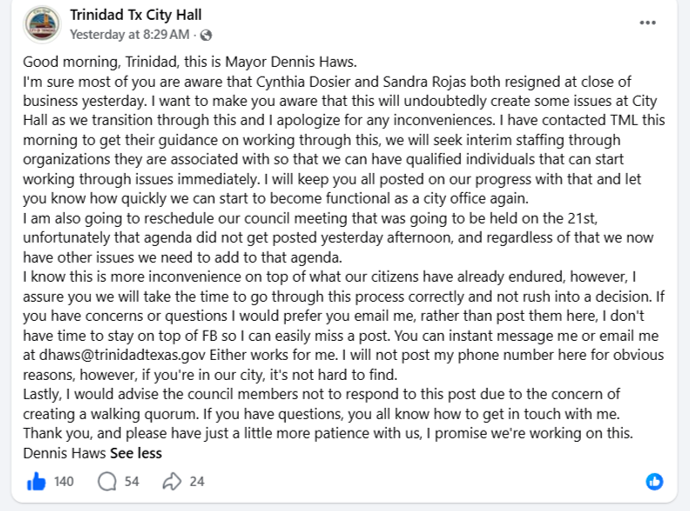
The City Administrator resigned earlier this week, adding more administrative difficulties. Mayor Dennis Haws did a great job here trying to explain the situation. He is a very busy man and I wish him the best. He should take encouragement that these situations can be resolved and he could look to the Texas Water Development Board for financial help.